
Gardens in Bloom: Lincoln’s Living Masterpieces
by Sriyani Tidball • photos by Tom Tidball
Every season, Lincoln’s gardens quietly unfold their magic, inviting us to step out of the daily rush and into a world alive with color, texture, and tranquility. These lush spaces are more than just pretty — they are living reminders of our connection to nature, community, and legacy.
Tucked in the vibrant intersection of 27th Street and Capitol Parkway lies one of Lincoln’s crown jewels: the Sunken Gardens. Originally crafted in 1931 during the Great Depression, this 1.5-acre garden is a flourishing symbol of resilience and creativity. Entering through the elegant Rotary Pavilion, guests are greeted by panels etched with Lincoln’s skyline across the four seasons, setting the stage for the breathtaking views ahead.
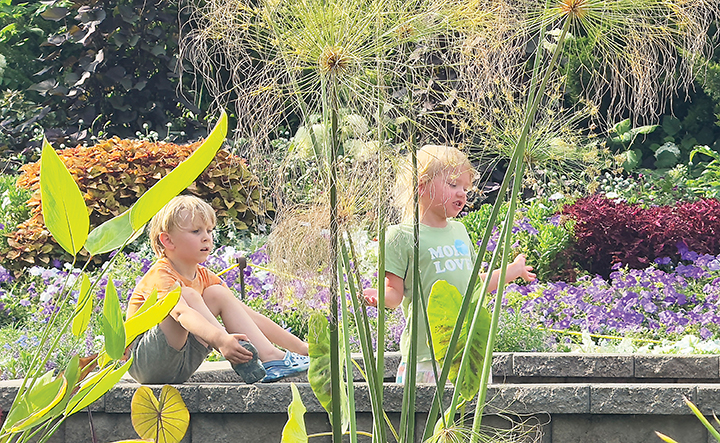
Winding paths take visitors past radiant beds of annuals and perennials, each thoughtfully arranged into artistic displays. Towering elephant ear plants, bursts of bold blooms, and the calming trickle of the lotus pond blend into a multisensory experience that changes with the months. Each year brings a new design theme — last year’s “Sun Salutations” warmed the garden in reds, oranges, and golds. Volunteers gather each spring for “Waking Up the Beds,” breathing new life into the soil, and in late fall, they come again for “Put the Beds to Bed,” closing the season with care.
Nestled inside the garden is a quiet gem: the Healing Garden, inspired by England’s famous White Garden at Sissinghurst Castle. Here, white blossoms glow under moonlight, offering a space of peace, remembrance, and reflection.
Families, artists, couples, and dreamers all find a reason to linger here. Children are mesmerized by koi fish. Photographers chase golden light. Couples exchange vows surrounded by petals and promises. And all of it — amazingly — is free.
Just a short stroll away, at 27th and C streets, the Hamann Rose Garden continues its 75-year legacy of elegance. More than 120 varieties of roses bloom in formal rows framed by boxwood hedges and anchored by fountains. The Joy Fountain, a sculpture by Edith Barretto Parsons, and the Bicentennial Cascade Fountain, with its bronze cherub, add old-world charm and serenity.
Adjacent to the Rotary Strolling Garden is a newer space designed with accessibility in mind. Meandering trails lead through three acres of perennial beds, native grasses, sculptural art, and a charming labyrinth. The garden’s thoughtful design welcomes all visitors, from energetic toddlers to those seeking a slower, reflective pace.
A few blocks away, the Veterans Memorial Garden in Antelope Park offers solemn beauty. Here, over 20 military monuments remind us of the price of freedom. Each path leads to a moment of reflection — a name, a stone, a memory. It’s a space to walk, remember, and give thanks.
Scattered across the city are even more botanical treasures. The University of Nebraska–Lincoln’s East and City campuses offer a constellation of unique garden experiences. On East Campus, the Earl G. Maxwell Arboretum feels like a hidden woodland, with mature oaks, prairie grasses, and shaded nooks perfect for quiet study or a slow afternoon stroll. Started over five decades ago, this five-acre living laboratory features native Nebraska plants, an impressive hosta collection, and a teaching prairie. Guided walks are offered from spring through fall, connecting visitors to the beauty and science of the natural world.
Back on the City Campus, the Cather Garden, Love Garden, and others offer delightful encounters with prairie plantings, formal blooms, and artistic landscapes nestled between historic academic buildings. These gardens are open to all, dawn to dusk, 365 days a year — another reminder that beauty belongs to everyone.
Further east, the Alice Abel Arboretum, located on the campus of Nebraska Wesleyan University, spans 25 acres and features over 100 species of trees and shrubs. The arboretum is a quiet sanctuary where each season tells a different story — buds in spring, deep shade in summer, fiery leaves in fall, and frost-kissed branches in winter.
For those who long to stretch their legs and immerse themselves in natural beauty, Pioneers Park Nature Center is a treasure. Spanning over 660 acres, the park includes woodlands, wetlands, tallgrass prairie, and native plant gardens. Here, visitors can encounter bison and deer, explore eight miles of trails, visit a children’s herb garden, or pause at the bird-watching blind. More than a garden, it is a full embrace of Nebraska’s natural landscapes and a powerful place for environmental education and wonder.
Together, these gardens paint a portrait of Lincoln as a city deeply rooted in stewardship and grace. They remind us that planting seeds — whether in the soil or in the heart — is an act of faith in the future.
In Lincoln, gardens are not just places — they are experiences, memories, and legacies blooming all around us.


Recent Comments