
Working Dogs of Lincoln
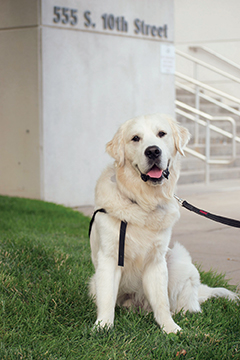
How therapy dogs bring comfort, calm, and connection to our community
by Michelle O’Dea
On any given day in Lincoln, a Goldendoodle brings connection to seniors in memory care, a Golden Retriever pads softly through a courthouse hallway, and a Goldendoodle curls up beside a nervous dental patient. These are Lincoln’s working dogs — not service animals in the traditional sense — therapy dogs whose calm presence helps ease fear, spark joy, and bridge human connections where words sometimes fall short. Their work is quiet, but their impact is unmistakable.
Therapy dogs are specially trained to provide comfort, reduce anxiety, and support emotional well-being. Unlike service dogs, therapy dogs are not trained for medical tasks and are only allowed in places where they are invited. Still, they are certified to interact safely with people in a variety of settings — from hospitals to courts, from schools to senior living facilities. In Lincoln, therapy dogs have become indispensable members of workplaces where stress and emotions run high.
Meghan Hungerford, a Dentist at Smile Innovations Dentistry, says they first acquired Cleo, a four-year-old Goldendoodle, to be a calming presence for children who might be nervous to receive a dental procedure. “We intended to get a therapy dog to help calm kiddos; however, the amount of interest from adults has been eye-opening,” says Hungerford.
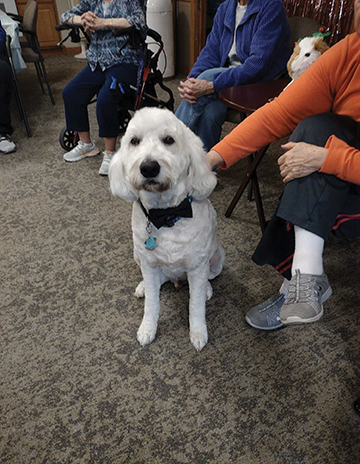
Benny, a working dog in Lincoln.
“We wanted a dog tall enough to be able to put their head in a patient’s lap, a dog with minimal shedding, and one with a calm demeanor. To get that all in one incredible dog, we had to wait a year for Cleo,” adds Hungerford. Cleo becomes a reward for children, and for anxious patients of any age. Quotes like “You don’t understand how much this means” or “You don’t realize how much I needed this” are often heard. “Cleo has been an amazing addition to our practice, even more than I anticipated,” concludes Hungerford.
Meanwhile, four departments at the City-County building partnered to advocate for the use of a therapy dog, with many others offering support. Barney, a four-year-old English Labrador, now provides direct therapy services to Lincoln Lancaster County Human Services, the Lancaster County Attorney’s Office, the Lancaster County Board of Commissioners, and the Lincoln Police Department.
“We liked the idea of creating a welcoming atmosphere in our office. Most clients, youth, and families who come through our front door have experienced some form of trauma, hardship, or are often meeting with us due to a law violation. Our case workers are phenomenal, but adding an even friendlier face to our office creates a more inviting environment and helps build rapport with youth, families, and clients,” says Lesley Ahrens, Diversion Case Worker and Quality Assurance Coordinator at Lancaster County Human Services.
Barney participates in diversion-related meetings, victim interviews, trial preparations, juvenile review hearings, and County Board of Commissioners meetings. He also makes department visits and attends celebrations when able.
“There have been numerous times Barney has assisted with navigating difficult emotions and reducing stress levels,” adds Ahrens, “Barney heard a client having a difficult time while visiting with their case worker. Barney nudged the cracked door open with his nose, walked in, and sat down right beside the client. The client instantly relaxed, and her look of fear and hopelessness transformed into one of relief and joy. The client explained she didn’t currently have a dog. Barney wasn’t able to solve the hardships this client was facing, but his presence alone created hope.”
Cassy Richardson, Activities Director at the Legacy Arbors, said, “We were inspired to have a therapy dog to improve resident social interactions, moods, anxiety, and symptoms of people living with dementia. Benny, a six-year-old English Cream Goldendoodle, fits the bill perfectly.
“We have a resident who had to leave her dogs at home, and Benny fills that missing piece of her life. She has trouble finding most words, but she sees Benny, she knows his name,” adds Richardson.
Therapy dogs can change a person’s mood or interrupt negative behaviors, often when human intervention is unsuccessful. Cassy adds that “Benny is intuitive and will set his head on a resident’s lap when he notices they are feeling sad. He reduces stress and anxiety in both residents and staff. Staff at all Legacy Communities know who Benny is (as he visits all locations), and it’s nothing but amazing.”
Across these three very different workplaces, one theme is clear: therapy dogs enhance emotional well-being for both the individuals they serve and the staff members who work alongside them. Anxiety is eased, moods lifted, and ordinary interactions are transformed into moments of human connection. Staff members themselves benefit, reporting reduced stress and a more positive work environment. These animals may not wear a badge or uniform, but their role is undeniably professional — and profoundly impactful.
Of course, bringing a therapy dog into a workplace is not without challenges. Scheduling visits, managing allergies, maintaining up-to-date training, and ensuring the dogs’ health and happiness require commitment and careful planning. Handlers and staff must balance the needs of the people with those of the animal, providing the dog enjoys its work as much as the humans do.
Despite the challenges, the rewards are immeasurable. Therapy dogs provide comfort to a nervous child, calm to a stressed court witness, and companionship to a resident in memory care. They turn tense moments into manageable ones, quiet loneliness into shared joy, and fear into reassurance. They may never know the full weight of the comfort they bring, but that’s the beauty of it. For therapy dogs, the job is simply to show up, tail wagging, ready to turn an ordinary moment into something extraordinary.
These dogs don’t just serve individual patients, clients, or residents — they serve the community as a whole. Their presence reminds us that compassion can take many forms, and that sometimes, healing comes on four paws rather than two. Lincoln’s therapy dogs may work silently, but their impact is loud and clear in the smiles, laughter, and calm moments they inspire.
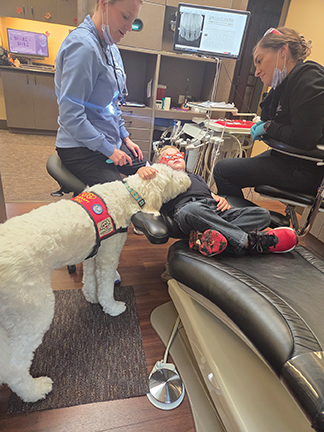
Cleo, a working dog in Lincoln, Nebraska helps at the dentist’s office.
Whether it’s Cleo at the dentist, Barney at the courthouse, or Benny in assisted living, these working dogs leave an indelible paw print on the lives they touch. And for the people of Lincoln, that paw print carries a simple yet powerful message: comfort, connection, and joy are never out of reach — especially when delivered by a wagging tail.
If you’re interested in training your dog for therapy work, or obtaining a trained therapy dog for your business or organization, contact Domesti-PUPS [domesti-pups.org] or Uplifting Paws [upliftingpaws.org].



Recent Comments