
College town

Lincoln is the proud capital of Nebraska, but it’s a college town too — a really big college town. The University of Nebraska’s flagship school has three campuses in the city, but Lincoln has many excellent smaller private and public colleges. Lincoln provides an impressive range of higher learning choices where anyone can expand their knowledge and skills.
The University of Nebraska-Lincoln
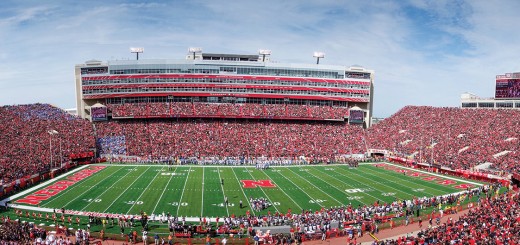
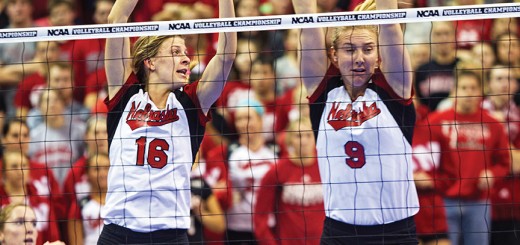
The University of Nebraska-Lincoln (UNL) is the largest university in Nebraska and the flagship campus of the 3-campus state university system. It began as a land-grant college in 1869 and now boasts an overall enrollment of 49,749 students, with 23,992 in Lincoln. UNL also has an impressive 66 percent graduation rate. A national leader in academics as well as athletics, UNL, a part of the Big Ten Conference, recently added the School of Computing to the College of Engineering and is recognized by the Carnegie Foundation as a Doctoral/Highest Research Activity university.
UNL is also nationally known for the University of Nebraska Press, the Sheldon Museum of Art — a major collection of American art — and the Prairie Schooner literary magazine.
The University in Lincoln has three campuses. The main campus is located in the heart of downtown Lincoln, and the beautiful East Campus is about two miles east on Holdrege Street. The newest and ever-growing Innovation Campus is only a few minutes away. They all contribute a youthful energy to Lincoln, with well over 150 majors and 100 graduate programs. UNL was one of the first institutions west of the Mississippi to award doctoral degrees. The first was granted in physics in 1896.
A place of high ambition, the university boasts a number of notable alums, including investor, philanthropist and Nebraska resident, Warren Buffet; former television talk show host, Johnny Carson; author Willa Cather, and Jeff Raikes, former CEO of the Bill and Melinda Gates Foundation, for whom the Raikes School of Computer Science is named.
The Undergraduate Creative Activities and Research Experiences Program (UCARE) is a unique, independent study program at UNL, and the Jeffrey S. Raikes School of Computer Science and Management is one of the reasons Lincoln’s ‘silicon prairie’ is flourishing.
Starting with a $20 million grant from the Johnny Carson Foundation, the Johnny Carson Center for Emerging Media Arts teaches innovative technology to solve human problems, to entertain, and to tell stories that inspire.
UNL is also an important source of Lincoln’s cultural enrichment and entertainment, including concerts, films, museums, theatre productions and other events. The University also benefits the state’s 93 counties with research-based information through the cooperative extension service and continuing studies program, as well as campuses in Omaha and Kearney. U.S. News and World Report ranked UNL as number 82 in public institutions in the U.S. You can find more information at unl.edu.
Doane University
Since 1872, Doane University has prepared students to lead and serve in a global community. As higher education evolves, students seek non-traditional education opportunities. These include flexibility for working students, credentials beyond the standard bachelor’s degree, engaging learning experiences, and curricula that provide immediate, practical benefits. Doane University meets these changing needs for students and employers both as students pursue undergraduate and graduate degrees, professional certificates and micro-credentials in person and online at Doane.
With campuses in Crete and Lincoln, students find community and build relationships with peers, faculty and staff who support them during and beyond their education — no matter which program they choose.
As a small liberal arts university, Doane’s faculty works closely with students — to answer questions, engage in discussions and advise students about classes and careers. Faculty strive to create dynamic and engaging courses that provide students with an immediate impact.
Innovation is one of the values of Doane University. Innovation is central to the university’s approach to ensuring its programs are relevant and prepare students for their future. A distinctive feature of Doane’s education is the close relationship between students and faculty. Small class sizes enable faculty to work closely with students, offering personalized support and meaningful conversations. Faculty regularly update their courses to ensure they remain relevant, dynamic, and engaging.
Doane’s residential campus in Crete provides undergraduate students with a more traditional college experience and extra-curricular opportunities, such as athletics, theatre, forensics and music. There are also undergraduate classes held in the evening in Lincoln to meet the needs of undergraduate students who work during the day. In addition, online classes are available to undergraduate students who prefer to learn at times that work best for them. This approach ensures their programs remain flexible and responsive to student’s needs.
Doane’s College of Business is committed to serving working professionals by offering graduate courses in five eight-week terms per year allowing students to finish their degree in two years while continuing to work. Specifically, Doane offers a Master of Business Administration program at its Lincoln campus, and a Master of Business Administration, Master of Arts in Leadership, and Master of Science in Instructional Design and Technology programs online. Dr. Daniel Bothe, Dean of the College of Business, emphasizes, “Our graduate programs are flexible and convenient, provide practical knowledge and experience that students can immediately apply to solve workplace challenges, and are designed to help our students advance their careers, increase their earnings potential, and expand their professional networks.”
Union Adventist University
Founded by the Seventh Day Adventist Church in 1891, Union Adventist University’s picturesque, 50-acre campus located in Lincoln’s historic College View neighborhood. More than 799 students of diverse faith backgrounds attend the university, hailing from around the world and coming together in Christian values.
Offering more than 50 majors, the college has particularly strong programs in nursing, teaching, science and business. They also offer a unique bachelor’s degree, in International Rescue and Relief. Union Adventist University consistently places in the top 14 in its regional category in the U.S. News and World Report. Visit www.uau.edu to learn more.
Nebraska Wesleyan University
Founded by Nebraska Methodists, Nebraska Wesleyan University (NWU) in Lincoln is home to over 1,500 traditional undergraduates and over 150 graduate students from across the country and around the world. NWU students thrive on a close-knit, supportive campus in a vibrant college town. At NWU most students engage in internships, research, service learning or study abroad. The NWU experience transforms each student to lead a life of learning, service, leadership, and success in a global society.
NWU features more than 130 majors, minors and preprofessional programs and master’s degrees in athletic training, business administration, nursing and social work. Nebraska Wesleyan ranks 48 in U.S. News & World Report’s top regional universities in the Midwest. Learn more at nebrwesleyan.edu.
Southeast Community College
The Southeast Community College (SCC) Lincoln Campus serves over 10,000 students seeking transfer courses and career/technical education. It also has campuses in Beatrice and Milford. SCC operates on a semester academic calendar, which means better alignment with Nebraska high schools and four-year colleges and universities to which SCC students transfer.
A major focus for SCC is producing more graduates to fill employers’ needs. Expanding the college’s facilities and programs will put more students into the workforce as qualified technicians in various areas, including agriculture, business, computers, culinary, community services, public safety, health care, construction, manufacturing, and transportation.
The largest campus is on the east edge of Lincoln where the college recently embarked on a $30 million renovation and expansion, including on-campus housing, a new $30 million welding facility, and the Sandhills Global Technology Center. SCC also serves 15 counties located in southeast Nebraska, and operates learning centers in Falls City, Hebron, Nebraska City, Plattsmouth, Wahoo, and York. Classes at those sites are both credit and non-credit. The Continuing Education Division offers classes and workshops on business, careers and professional development, trades and industrial technology, health care, computers and technology, adult education, personal interest, and traffic safety and licensing. SCC also offers customized training to businesses and industries, both large and small, throughout the 15-county area. Additionally, many of SCC’s associate degree-level credit programs are transferable to major universities, providing a more flexible and affordable education.
Ninety-three percent of recent SCC graduates found work or continued their education, and of those employed, 89 percent are working in Nebraska. Get more information at www.southeast.edu.
Bryan College of Health Sciences
Known for outstanding healthcare education, the Bryan College of Health Sciences takes pride in providing clinically based nursing and allied health programs as an affiliate of Bryan Medical Center. The college offers undergraduate degrees in nursing and health professions, graduate degrees in nurse anesthesia, and a number of certificate options. Visit www.bryanhealthcollege.edu for details.
Recent Comments